In the midst of climate change, biodiversity loss, and the accelerating degradation of our oceans, environmental activism is increasingly taking place in digital spaces. Platforms such as TikTok became important sites where environmental messages are communicated as well as felt, shared, remixed, and transformed. What makes this relationship between music, sound, and environmental activism interesting is that it does not depend on one musical style or artistic approach.
Meeting Doechii’s Tiny Desk concert through our white ears
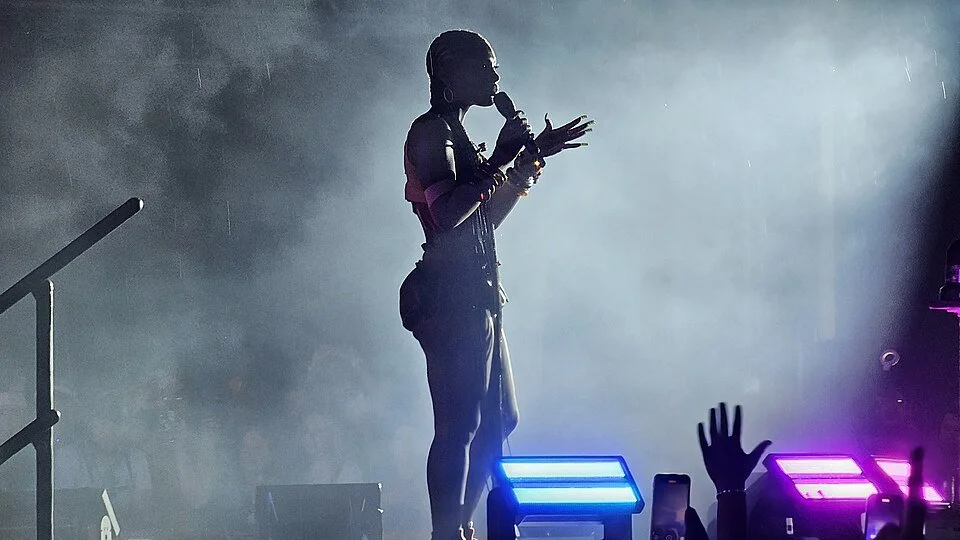
Doechii arrives vividly in our ears, on our screens, each time we watch her celebrated YouTube performance on NPR Music’s Tiny Desk series (2024). Here she is, together with her magnificent ten-headed, all-women-of-colour ensemble. The video is an intimate, acoustic chapter of her grammy-award winning project Alligator Bites Never Heal (2024).
Listening Beyond the Lyrics: Musical Narrative in Taylor Swift's reputation and Why it Matters
When Pitchfork reviewed Taylor Swift's reputation album (2017), it opened by discussing celebrity feuds, Kanye West, politics, and Swift's carefully crafted public image crumbling. Hundreds of words later, readers knew a great deal about the viral cultural context surrounding the album but remarkably little about the music itself. Aside from a few passing remarks, there was almost no discussion of what the album actually sounds like or how its musical choices shape its meaning (Cox, 2017).
“All Those Men I Make Them Nauseous”: Women Rappers Bringing Wreck in the Netherlands
Colonial continuities: memory activism in French rap
Approaching the overlooked: Cognitive processes in the perception of pop songs
How do people perceive music? What do they really "hear" from it? - While many have attempted to explain music perception from psychological aspects, such as how certain musical features can evoke specific emotions, the results may not always be conclusive as different listeners may perceive different emotions from the same song.
“Everybody understands the blues!” But can they sing it?
“Everybody understands the blues!” That’s how Albert King opened his performance of ‘Blues Power’ on Live Wire / Blues Power (1968), and perhaps it summarizes precisely why the blues, which originated as an undeniably African American mode of expression, rapidly grew out to become an internationally successful musical genre, going beyond ethnic, geographical or social boundaries.
Take a Byte: Janelle Monáe’s Dystopian Dirty Computer World and the Intersectionality of the Cyborg
In her 1985 seminal book, A Cyborg Manifesto, Donna Haraway presents a possible reality in which humans are to become cyborgs - human and machine hybrids - by the end of the late 20th century. She based her observations on the imminent breakdown of three boundaries, namely that between human beings and animals, organisms, and machines, and the physical and non-physical.
Music in a populist world
Bridging the Gap between Film Music and Politics
On Techno in Space
Spatialised sound is all around us. Binaural hearing — the relative time-difference by which sounds reach the ear (and this is a case of milliseconds) — enables the listener to localise the sound source quite accurately. This holds true in a concert venue too. In a techno club, however, it’s a bit more tricky…
Showcasing European Music Festival Networks
Pop music festivals are hot. And not surprisingly so: They speak to our collective imagination and offer shared experiences of musical celebration. As such, they have been an essential part of our cultural experience for quite some time. And continue to be. In fact, in the last decades the number of festivals increased dramatically and expanded into a diverse array of – often genre specific – music events…
Are we all lonely ravers?
As a researcher of cultural consumption, not only did the “lockdown” of early March affect my social life but, like many others, also my work. I have been researching audience experience for the last few years, going to concerts and festivals of all genres, asking visitors what it is in the concert experience that drives and motivates them to attend.
The Audience as Gatekeeper
Performing the Process: Exploring Metamusicality in Pink Floyd’s Wish You Were Here and Eminem’s The Eminem Show
New blog entry by Maartje Boekestein [winner of the 2019 IASPM VNPF Popular Music Thesis Prize [Bachelor’s]
Where’s my snare? / I have no snare on my headphones / There you go. Eminem’s opening lines on his 2002 single “Cleanin’ Out my Closet”. Performed ad lib and in no way related to the content of the song that is about to follow. Then why are they left in?